
1. Six Functions in One Part
Self-skinning (integral-skin) polyurethane foam insulation jackets are molded in a single cycle — a dense, smooth outer skin forms over a closed-cell foam core. One part delivers six functions:
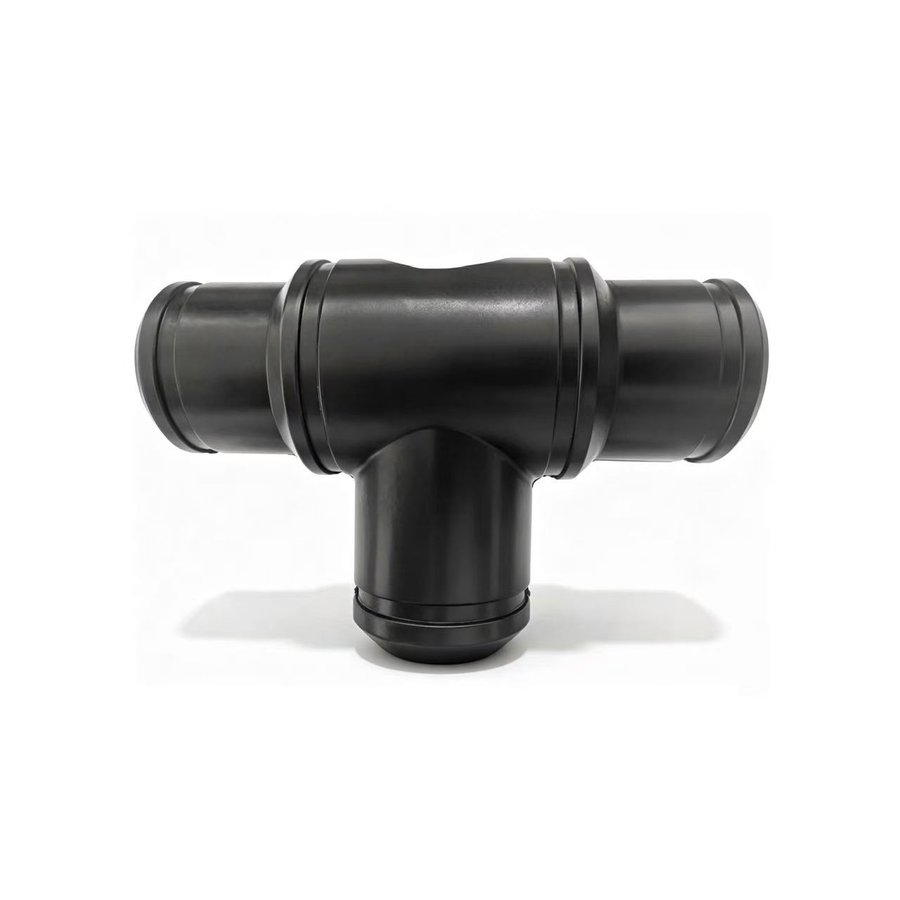
- Anti-scald — keeps the surface temperature safe on hot-water fittings and mixing valves.
- Thermal insulation — the closed-cell core cuts heat loss and reduces reheating.
- Anti-condensation — the dense skin plus closed cells stop sweating and dripping on chilled lines.
- Freeze protection — slows heat loss to delay freezing in exposed runs.
- Noise damping — the foam core absorbs water-hammer and flow noise.
- Protection & cleanability — a tough shell resists knocks; the skin wipes clean, ideal for hospitals, food and aged-care settings.
2. Insulation Performance: Best Among Conventional Materials
Insulation quality comes down to thermal conductivity λ (lower is better):
| Material | Thermal conductivity λ (W/m·K) |
|---|---|
| Vacuum insulated panels (VIP) / aerogel | 0.005–0.020 — specialty materials; costly, brittle and cannot be molded to shape. |
| Phenolic foam | 0.020–0.025 — slightly lower, but brittle, absorbent and non-durable. |
| ✅ Closed-cell polyurethane (PU) | 0.022–0.028 — the lowest among conventional materials. |
| XPS / EPS (polystyrene) | 0.028–0.040 |
| Glass wool / rock wool | 0.032–0.045 |
| EPDM closed-cell elastomer | 0.033–0.038 |
| EPP (expanded polypropylene) | 0.035–0.045 |
| EPE (expanded polyethylene) | 0.035–0.045 |
Bottom line: among conventional materials that can be molded to shape, are waterproof and cost-effective, closed-cell PU insulates best — roughly 20–30% better than EPP at the same thickness.
3. Why PU Replaces EPP: Source Factory + Automation
EPP dominates the market, and a big reason is its low price. That is also why many assume PU foam is expensive.
We took the cost out at the source:
- We are the source factory: product design, mold design and manufacturing, and production all happen in-house — no middlemen, no markups for outsourced tooling or production.
- Automated production (see the animation below): low-pressure foaming, automatic mold opening/closing and metered feeding are all automated, slashing labor cost.
- The result: our PU foam jackets are not much more expensive than EPP on the market.
For the same money, EPP gives you cheap but lower insulation, a grainy surface and no finished look. Self-skinning PU gives you better insulation, a dense skin that molds fine logos directly, water resistance, and mold-to-shape fit.
4. A New Generation: Integral Snap-Fit, No Cable Ties
Conventional jackets (including EPP) rely on cable ties — slow to fit, ugly, and every service means cutting off the old ties.
Our newest snap-fit jacket builds the fastener right into the part:
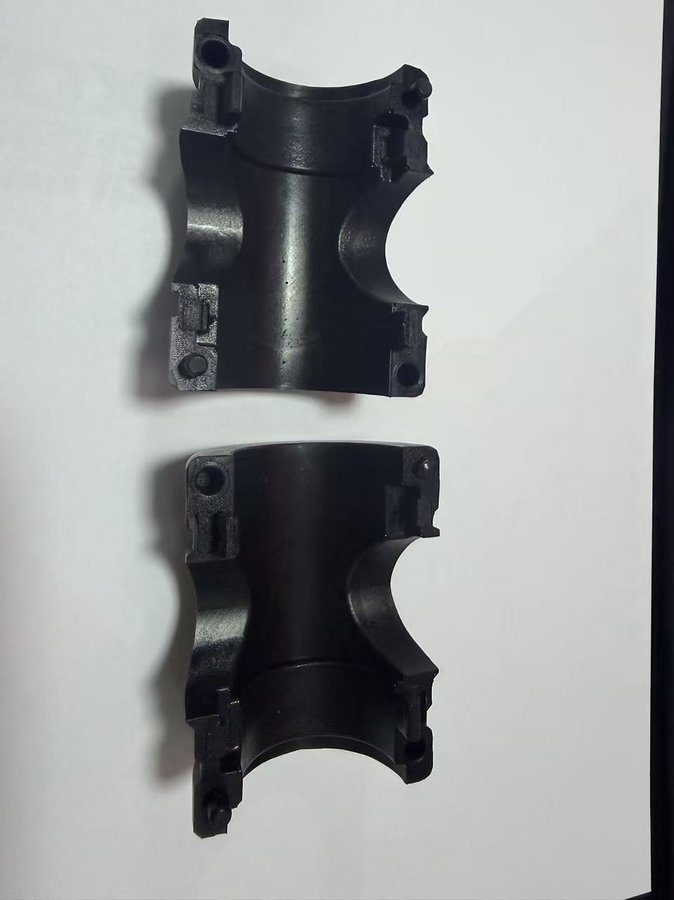
- Integral interlocking clasp — the two half-shells have matching locking features on their mating edges; they snap together and hold, with no cable ties at all.
- Split design — installs without threading over the pipe end; just close the two halves around the line already in place.
The payoff: much faster assembly (one snap, less labor and time) and zero-cost maintenance (open the clasp to service, re-close as good as new — no replacing ties every time, fully reusable). For valve, fitting and equipment makers, that saves both line time and long-term maintenance cost.
5. Full In-House Capability, Low MOQ
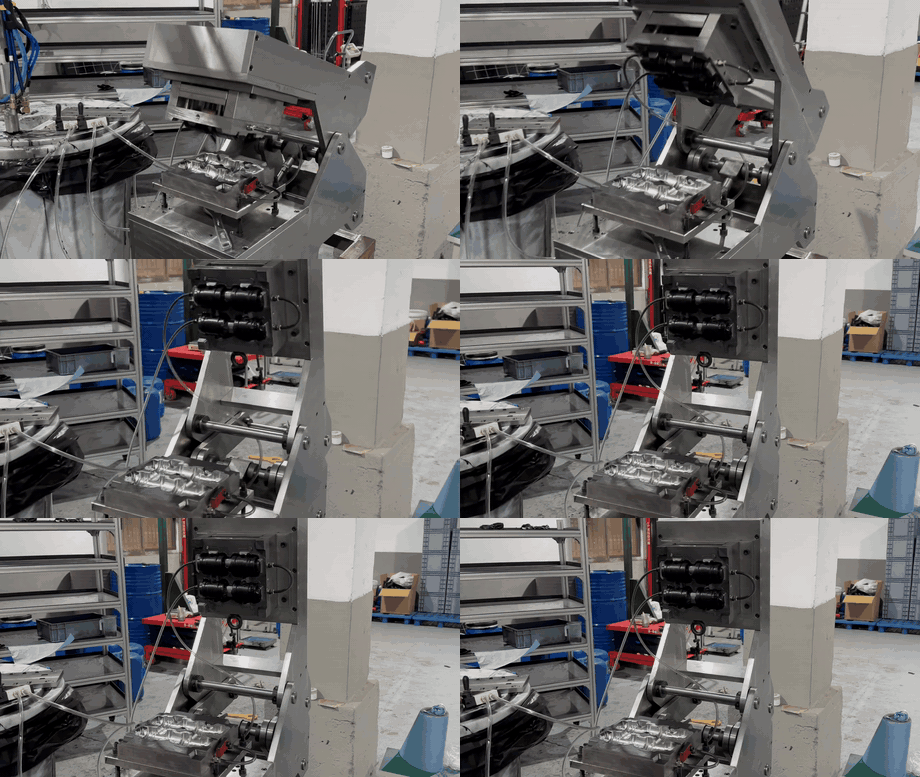
- In-house tooling — molds precisely match your fitting geometry: tees, elbows, valves and custom junctions.
- In-house low-pressure foaming — dense skin plus closed-cell core in one shot; color, hardness and density are adjustable.
- Low MOQ, short lead time — small-batch customization is our strength.